Five years ago, this question came up in almost every initial call. Today it still comes up — just phrased differently. People aren’t usually asking “is telehealth a real option?” anymore. They’re asking, “is it as good as seeing someone in person?” It’s a fair question, and the research has caught up to it.
The short answer: for most mental health conditions, yes. For some, telehealth is actually the better fit. Here’s the longer answer.
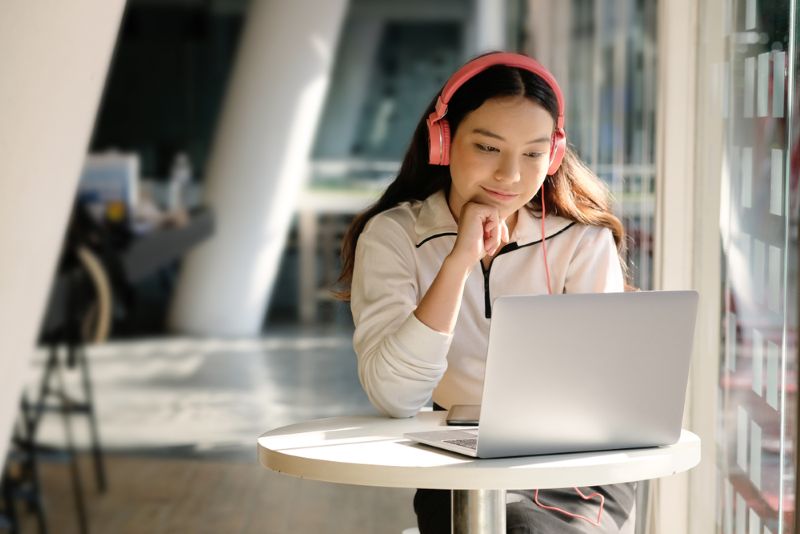
Online Therapy Effectiveness: What the Research Actually Shows
Over the last decade, and especially since 2020, a substantial body of research has compared telehealth mental health care to in-person care. The overall finding on online therapy effectiveness is remarkably consistent: for conditions like depression, anxiety, PTSD, and ADHD, video-based therapy and psychiatry produce outcomes that are either equivalent to in-person care or close enough that the difference isn’t clinically meaningful.
Meta-analyses published in peer-reviewed journals — including in the Journal of Telemedicine and Telecare, JAMA Psychiatry, and others — have found comparable results across measures of symptom reduction, treatment adherence, and patient satisfaction. Cognitive behavioral therapy in particular translates extremely well to video delivery, and that’s one of the most commonly used approaches in both virtual therapy and psychiatric medication management.
Where Telehealth Shines
A few conditions and situations benefit from telehealth in ways that go beyond “equivalent.”
Anxiety, especially social anxiety
For anyone with significant anxiety — including social anxiety, agoraphobia, or panic disorder — the barriers of getting to an in-person appointment can be part of the problem. No parking lot, no waiting room, no small talk on the way in. Many patients open up faster from their own living room than they ever did in an office.
Depression
On a low day, getting out the door for a 10 a.m. appointment can feel impossible. Telehealth meets people where they are — which, with depression, is often the whole point. No-show rates drop meaningfully when the appointment is on the couch.
ADHD
Adults being evaluated or treated for ADHD often struggle with the logistical pieces of in-person care — remembering appointments, finding parking, accounting for travel time. Telehealth eliminates most of those friction points. The research on telehealth ADHD care is strong and growing.
Busy or geographically limited lives
For parents of young kids, people with demanding jobs, those in rural areas, or anyone who would otherwise face a 40-minute commute each way, telehealth can be the difference between getting treatment and giving up on the idea.
Where In-Person Care Still Has an Edge
I want to be honest about the other side of the picture. Telehealth is not the right fit for every patient or every moment.
- Active safety concerns. If someone is in acute crisis — serious suicidal ideation with a plan, or a psychiatric emergency — the right call is an emergency department or in-person care, not a video visit.
- Complex medication management with physical monitoring. Some medications require regular blood pressure checks or lab work. This is still manageable with telehealth coordinated with a primary care doctor, but it adds logistical steps.
- Severe substance use disorders. These often need higher-intensity in-person support, especially at the beginning of treatment.
- Patients without a private space. Therapy only works if you can speak freely. If you don’t have a room where you can close the door, that’s a real problem telehealth can’t solve.
For the majority of people dealing with anxiety, depression, ADHD, and general mental health concerns, none of these are dealbreakers. But it’s worth naming them.
What Makes Telehealth Work Well
A few factors separate a great telehealth experience from a frustrating one.
- A provider who is trained in telehealth care specifically. The medium has its own rhythms — reading facial cues through a camera, managing silences, establishing safety check-ins. Experienced telehealth clinicians adapt to all of it.
- A private, comfortable space on your end. Not perfect — just private enough to speak freely.
- A reliable connection. Dropped video mid-session isn’t fatal, but it’s disruptive. Wired internet or strong Wi-Fi helps.
- A willingness to be open on camera. Some people feel more exposed on video, others feel more protected. Either reaction is normal and usually settles after the first session or two.
How We Do Telehealth at Family Psychiatry & Therapy
Our practice treats patients entirely by telehealth across New Jersey and New York. You can read more about how our online telehealth therapy works, including scheduling, what to expect in a session, and insurance. Services include:
- Initial psychiatric evaluations (typically 45–60 minutes)
- Ongoing medication management
- Treatment for anxiety, depression, ADHD, OCD, PTSD, and related conditions
- Coordination with your therapist, primary care doctor, or other specialists
We use a secure, HIPAA-compliant video platform, and the logistics — booking, forms, prescriptions sent electronically to your pharmacy — all happen online.
The Question Worth Asking
The better question isn’t “does telehealth work?” The research answers that. The better question is, “would telehealth psychiatry in NJ or NY work for me, given my situation, my preferences, and what I’m dealing with?” That’s a conversation worth having with a psychiatrist who can look at your specific picture. If you’re not even sure whether psychiatry is the right starting point, our post on psychiatrist vs. therapist may help you decide.
Take control of your life with the help of Dr. Miller and contact our office today at 201-977-2889 to schedule a telehealth evaluation. We see patients across New Jersey and New York.
— Dr. Miller, Family Psychiatry & Therapy